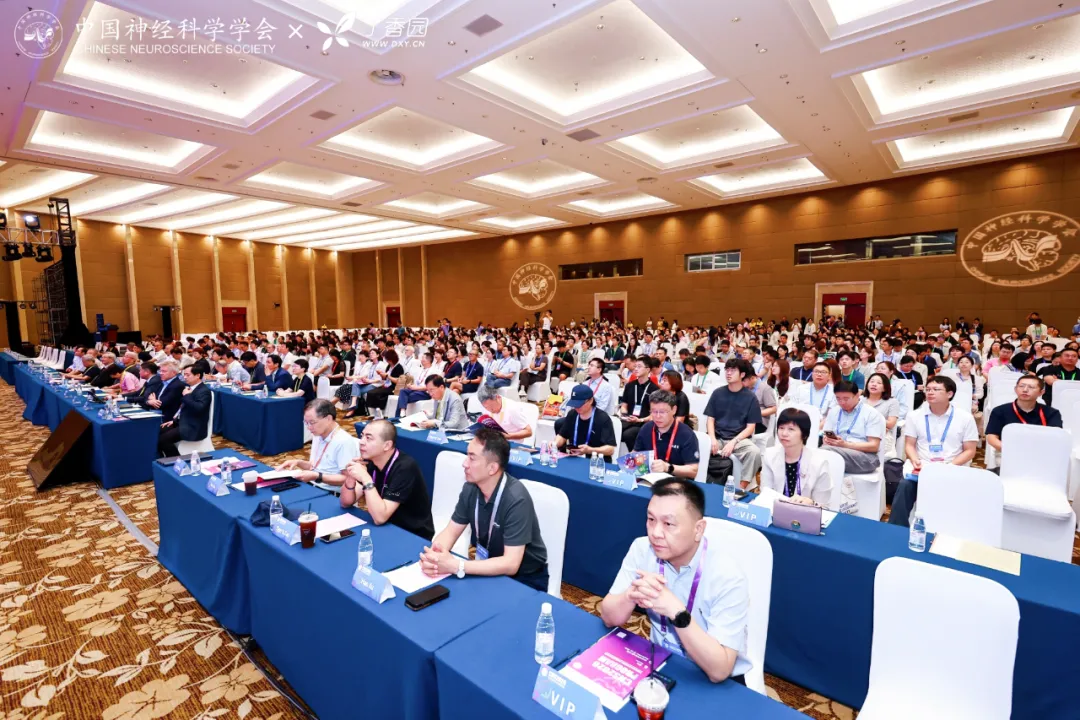

Recently, the National Science and Technology Award Conference, the Joint Academician Conference of the Chinese Academy of Sciences and Chinese Academy of Engineering, and the 11th National Congress of the China Association for Science and Technology (CAST) were held in Beijing. General Secretary Xi Jinping attended and delivered an important speech, fully affirming scientific and technological achievements, analyzing the situation in depth, clarifying strategic tasks, and setting clear requirements for CAST organizations.
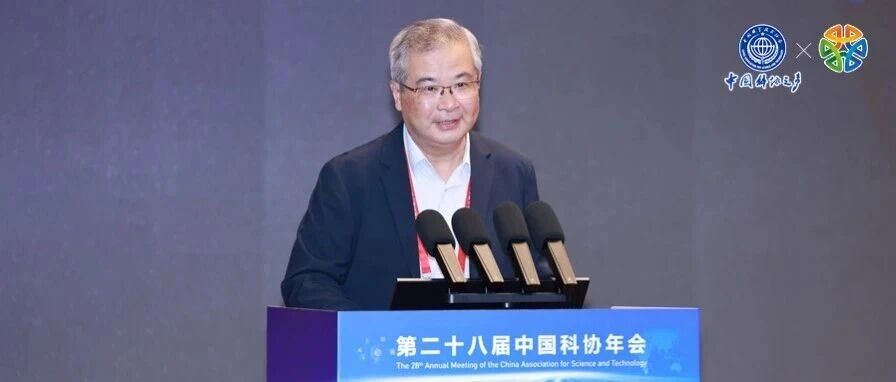
On July 15, the main forum of the 28th CAST Annual Conference was held at the China Science and Technology Hall in Beijing. Zhang Xu, Chair of the Chinese Neuroscience Society and Academician of the Chinese Academy of Sciences, delivered a systematic presentation at the main forum, outlining the complete pathway from basic research to industrial implementation of brain-inspired intelligence.
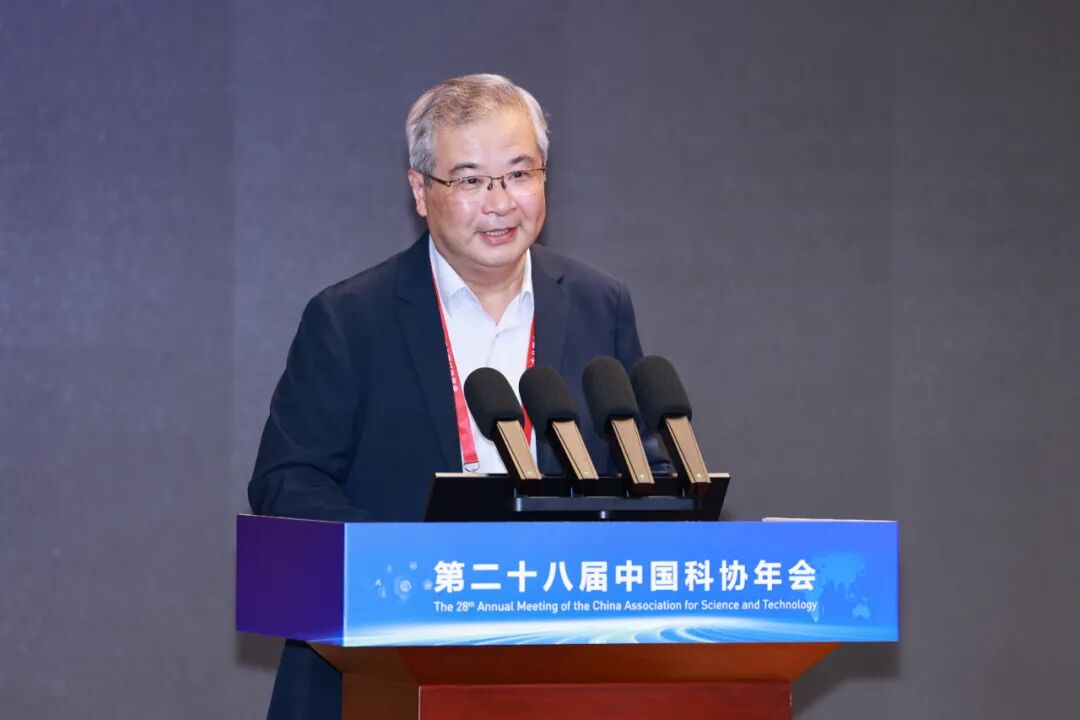
Zhang Xu delivering a keynote report at the main forum of the 28th CAST Annual Conference
"The human brain has 86 billion neurons and consumes only 20 watts; an artificial intelligence system of the same scale consumes up to 8 megawatts. Behind this enormous difference lies the key to the next generation of intelligent technology transformation."
Regarding the industrialization process, Zhang Xu provided a clear timeline: "Within five years, brain-inspired personal computers (BI PCs) will enter millions of households."
From Innovation Chain to Industry Chain
Zhang Xu reviewed the team's decade-long exploration. In 2014, the Shanghai Branch of the Chinese Academy of Sciences launched the "Shanghai Brain-Intelligence Engineering" initiative, attempting to bridge the gap between brain science and artificial intelligence. "At that time, we didn't know what brain-inspired intelligence was; we only realized there was a huge gap between the two," Zhang admitted. AI had long relied primarily on computer science, mathematics, and statistics, with little connection to the deep advances in modern brain science.
This situation fundamentally changed around 2023.
The team derived the complete definition of brain-inspired intelligence from the practice of integrating brain science and AI: it is an intelligent science and technology inspired by brain science, belonging to the category of technological science. Its core lies in drawing on the principles and working mechanisms of the human brain's perceptual-cognitive neural networks to engineer intelligent frameworks, algorithms, models, and computing systems inspired by brain information processing mechanisms.
Zhang was particularly excited that the innovation chain and industry chain of brain-inspired intelligence exhibit a rare "resonance" characteristic.
"From basic research on brain perceptual-cognitive neural networks, to brain-computer interfaces and brain regulation technologies, to brain-inspired algorithm models, intelligent chips and sensors, and ultimately to general brain-inspired intelligent computing systems — this is not only a scientific innovation chain but also an industrial innovation chain," he explained. Each link spawns specialized enterprises, and these enterprises are essentially different nodes on the same innovation chain.
This judgment has been continuously validated in practice. In 2016, Cambricon was born from the "Brain-Intelligence Engineering" ecosystem and rapidly grew into a globally leading AI chip company. United Imaging Healthcare has become competitive globally in brain imaging. iFlytek, Siasun Robot, and other enterprises also participated deeply in the early exploration.
Zhang divided the brain-inspired intelligence industry ecosystem into four layers: core brain science research and brain-inspired algorithm R&D institutions; infrastructure layer, including processors, chips, and computers; supply chain and manufacturing layer, involving hardware production and software development; and broad empowerment across medical, industrial, and financial sectors.
Five-Year Roadmap
Zhang Xu showcased multiple breakthrough achievements, outlining a clear evolutionary path from large-scale facilities to personal terminals.
Large-scale supercomputing facilities took the lead. In 2024, Zhang's team released the world's first 10-billion-neuron brain-inspired heterogeneous fusion supercomputing system, requiring only 6 cabinets and 30 servers — far smaller than traditional supercomputers.
The core chips achieved a leap in energy efficiency. Despite using a 40nm process, the team's brain-inspired wafer chip achieved an 18x energy efficiency advantage over the 7nm A100 GPU when processing unstructured data. A single brain-inspired chip already supports 9.2 million spiking neurons. Zhang emphasized: "This is not just engineering optimization, but a fundamental transformation from computing units to neural network architecture."
The greatest challenge lies in interdisciplinary collaboration and paradigm fusion. "For brain-inspired intelligence to truly break through, the entire chain from brain cognitive mechanisms to algorithm models, to chips and systems must be connected."
A basic research study published by Zhang's team in 2023 in Cell Research revealed a novel direct pathway from whole-brain pain sensation to the cortex — pain signals do not need to pass through the thalamus "relay station" but project directly from spinal cord neurons to layer 5 of the cerebral cortex, enabling rapid integration of perception, cognition, and intuition.
This neuroscience discovery is highly consistent with the approach of mathematician Cai Jiang's brain-inspired algorithm model — the Intuitive Neural Network (INN). A small brain-inspired computing entity based on INN principles, consuming only 6 kilowatts, can support 1,153 x86 CPU cores for computation, with large model training speed reaching 360,000 tokens/second and inference speed of 1.35 million tokens/second — equivalent to a computing cluster of over 100 H800 GPU servers, but with much lower energy consumption. "This is the fundamental value of basic research for industrial innovation."
The timeline is clear. When asked about the industrialization schedule, Zhang gave a definitive assessment: "Conservatively, it will definitely be realized within five years, and it will be a continuous development."
He depicted an upcoming new scenario: enterprises, laboratories, and even households will have their own small intelligent supercomputers capable of independently completing multimodal large model training, without sending data to centralized supercomputing centers.
Zhang stated that this transformation will profoundly rewrite data sovereignty and business models. Unlike traditional AI's reliance on cloud-based large models — which are prone to privacy leaks — brain-inspired computing enables private deployment. "You won't have to worry about how your phone calls are known or how your privacy leaks out; that era will gradually fade away," he emphasized, noting that this is also an important lever for Chinese high-tech industry going global.
Ecosystem Building is Key to Scaling
The path to industrialization still faces multiple challenges, and Zhang has a clear-eyed view of these.
First, the brain-inspired intelligence industry has high barriers and scarce talent. "We need more engineers who know how to use this technology to serve enterprise data processing and model building."
At the same time, "Starting from scratch is unrealistic. We need to expand on the existing AI technology system, build industry ecosystems through co-creation, resource integration, and collaboration with developers and investors." Zhang emphasized, "The biggest characteristic of intelligent technology is that without scenarios there are no applications, and without applications there is no market." He called on government and society to jointly promote exemplary application demonstrations, prioritizing healthcare, industrial simulation, and edge computing.
Regarding current public attention on brain-computer interfaces, he urged attention to the potential of non-invasive brain-computer interfaces in the health sector, such as dream regulation for sleep quality improvement and anti-drowsiness driving alerts. "These are genuinely beneficial to people and have larger markets."
Zhang suggested that while the state continues to increase investment in basic research, it should avoid funding only single links disconnected from the overall chain. "Do more segmental support to connect them." He revealed that with CAST's support, the Chinese Neuroscience Society has organized the compilation of series reports including the "Brain-Inspired Intelligence Industry and Technology Development Roadmap" and "Brain-Computer Interface Industry Technology Roadmap" to provide references for policy-making.
"Brain-inspired intelligence is not about imitating the brain, but about using the brain as the first principle to build a new computing paradigm capable of self-learning, self-evolution, and forming cognitive structures," Zhang said. "It gives us the opportunity to verify scientific hypotheses about consciousness, learning, and cognition in machines, while simultaneously understanding the brain and ourselves. Our era is arriving."

Editors: Zhang Nan, Deng Hanwen
Reviewers: Zhang Jingyi
Duty Editor: Song Yurong


The 28th CAST Annual Conference Main Forum Held in Beijing
Please indicate the source when reposting: Voice of CAST WeChat Official Account
Submissions welcome, email: kexiezhisheng@cast.org.cn
This article is reposted from the Voice of CAST WeChat Official Account. Original link: https://mp.weixin.qq.com/s/_nCu1A_9wjT-N2EXtrv0Rw