
Brain-inspired Processing
Event-driven spiking neural networks with in-memory computing — neuromorphic chips and systems that far outpace GPU efficiency on matching tasks.
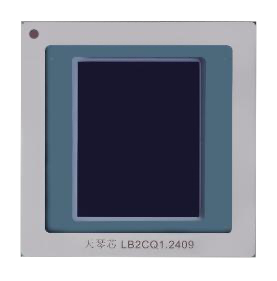

LYRA-β Max Brain-Inspired Chip BIM204
Built on the second-generation Tianqinxin processing core (BPU-II), chiplet interconnects scale spiking-neuron compute to 4.6 million with ~2.7× simulation speed over the previous generation, supporting on-chip brain-inspired model training.
Not another
GPU. It's a brain.
BPU (Brain Processing Unit) refers to spike/event-driven neuromorphic computing chips and systems. Its core goal is to provide native hardware support for SNN neuron updates, synaptic event propagation, and event routing/scheduling — constructing scalable brain-inspired computing systems through asynchronous AER (Address-Event Representation) communication.
TrueNorth, Loihi, and more recent wafer-scale neuromorphic systems are all representatives of this class. On tasks matching its paradigm — event streams, sparse temporal signals, online learning — BPU far outpaces traditional GPU efficiency.
Compute only on actual spikes
Skip invalid dense MAC sweeps
Moving data costs more than computing
BPU vs GPU:
not a replacement, complement.
If "computing efficiency" means effective task volume per unit power, BPU typically significantly outperforms GPU on tasks matching its paradigm.
Efficiency depends on whether the task can be expressed as a sparse event-driven SNN and efficiently mapped to BPU neuron/synapse models.
Three forms,
one brain.
From PCIe accelerator card to wafer-scale server — choose the right BPU form factor for your task scale.
BPU PCI Compute Card
Single or few BPU chips packaged as cards / development platforms, connected via PCIe to host. Easy integration into existing server workflows with low barriers.
- PCIe interface, easy integration
- Low development barrier
- Suitable for prototyping
BPU Wafer Computing Module
BPU chiplet modular packaging, flexibly integrable into various computing platforms for higher-density brain-inspired compute.
- Modular design
- Flexible integration
- High-density computing
- 400M+ neuron simulation
Tianqin Xinhai · Wafer Server
Wafer-scale neuromorphic system with on-wafer short-distance high-density interconnects. Significant advantages in large-scale event communication and energy efficiency.
- Billion-scale neurons
- Trillion-scale synapses
- 10x+ vs NVIDIA A100
- Near-biological efficiency
PCIe version
Prototyping, small-scale apps. Easy workflow integration.
Module version
Mid-scale apps. Flexible integration, customizable.
Wafer-scale
Ultra-large brain simulation. Billion-neuron scale, near-biological efficiency.
Tianqin
Xinhai.
A breakthrough wafer-scale neuromorphic computing system — interconnected on a single wafer into a unified event-driven compute network.
What is wafer-scale computing?
Wafer-scale BPU computing interconnects numerous brain-inspired chips (or chiplets) on a single wafer into a unified event-driven system. Computation remains fundamentally SNN neuron state updates and synaptic event propagation — but scaled to "wafer-level neuron-synapse totals." Events transmit at high speed via asynchronous AER, with hierarchical timesteps or GALS synchronization ensuring temporal consistency across chiplets.
Performance breakthrough
High-density interconnect
On-wafer short-distance high-density interconnects replace PCB-level long connections, significantly reducing bandwidth, latency and power penalties.
Ultra-high efficiency
Brings large-scale SNN and brain simulations closer to biological system efficiency in power-latency metrics.
Event-driven architecture
Events transmitted at high speed via asynchronous AER, with GALS synchronization ensuring temporal consistency.
Brain-scale simulation
Supports near-brain-scale parallel spiking computation with billion-neuron parallel processing.
An event-
driven world.
BPU is best suited for scenarios where inputs are naturally event streams or sparsifiable, and decisions depend heavily on temporal structure.
Brain simulation research
Large-scale neuroscience circuit simulation with billion-neuron parallel processing.
DVS event camera
Event-based visual perception processing with ultra-low latency real-time response.
Low-power edge AI
Ultra-low latency real-time control and online learning for IoT and embedded scenarios.
Spiking sensor fusion
Radar / sonar / tactile sensor integration with unified multi-modal event stream processing.
Common thread: strong requirements for low latency, low power, sparse temporal processing, or online plasticity.
From card,
to server.
Neogenint LYRA-β Max Brain-Inspired Chip BIM204
LYRA-β Max (BIM204) is a brain-inspired chip using the second-generation Tianqinxin processing core (BPU-II). Based on chiplet interconnect technology, it expands spiking-neuron compute scale to 4.6 million, improves simulation speed by about 2.7x versus the previous generation, and supports on-chip brain-inspired model training.
- Uses the second-generation Tianqinxin processing core (BPU-II)
- Based on chiplet interconnect technology
- 4.6 million spiking-neuron compute scale
- About 2.7x faster simulation speed versus the previous generation
- Supports on-chip brain-inspired model training
- Suitable for sparse unstructured data processing
- Applicable to large-scale brain simulation, graph-network analysis, and industrial simulation solving
4.6M neurons · BPU-II · chiplet · 2.7x simulation speed
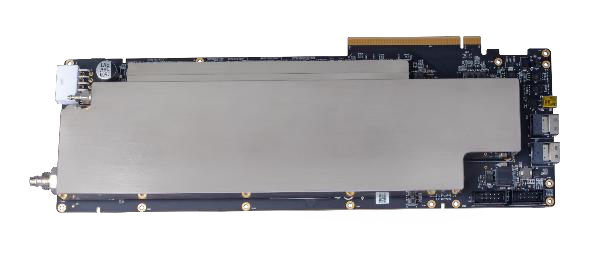
Neogenint LYRA-β / LBM212 Brain-Inspired Computing Card
The LYRA-β / LBM212 brain-inspired computing card supports BI-Link interconnect expansion, up to 26 million simulated neurons, variable precision (FP32/FP16/INT8), and the LYRArc-II memory-computing fusion processing architecture.
- LYRArc-II memory-computing fusion processing architecture
- Supports BI-Link brain-inspired computing card interconnect expansion
- Supports up to 26 million neuron simulation computing
- Supports variable computing precision (FP32/FP16/INT8)
- Supports full-range neuron connections
- Supports event-driven computing and sparse computing
- Supports microcode-level instruction reconfiguration for brain-inspired computing
- Supports brain-inspired neural network training and inference
- Suitable for large-scale brain simulation, graph-network analysis, and industrial simulation solving
Supports up to 26 million simulated neurons
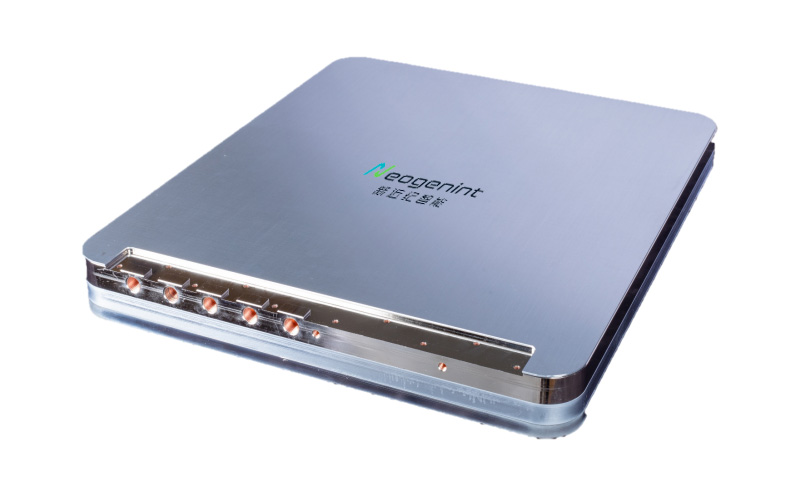
Neogenint Brain-Inspired Wafer Computing Subsystem Module LBW2216
Tianqin LBW2216 brain-inspired wafer computing subsystem is based on Neogenint's self-developed LYRArc-II linearly scalable processing architecture and a new integrated assembly technology covering compute, power supply, cooling, and interconnect. It is compatible with general server barebones, supports 400M+ spiking-neuron compute, and continues to refresh brain-inspired compute-scale records.
- Self-developed LYRArc-II linearly scalable processing architecture
- Integrated assembly technology for compute, power supply, cooling, and interconnect
- Compatible with general server barebones
- Supports 400M+ spiking-neuron compute scale
- Continues to refresh brain-inspired compute-scale records
- Supports on-chip brain-inspired model training
- Supports direct expansion between subsystems
- Suitable for sparse unstructured data processing
- Applicable to large-scale brain simulation, graph-network analysis, and industrial simulation solving
Supports over 400 million neuron simulation computing
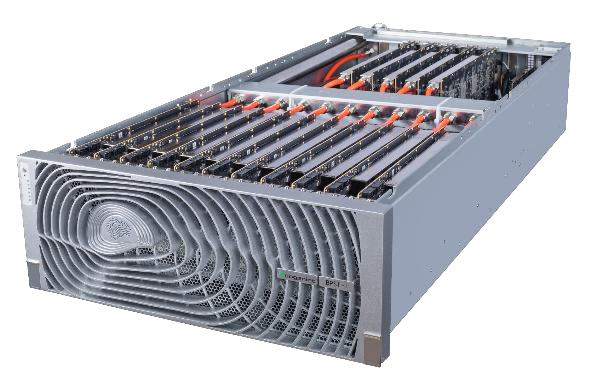
Neogenint High-Density Brain-Inspired Computing Server BPSC-II
BPSC-II is a high-density brain-inspired computing server integrating Neogenint's ultra-high compute-density system design, brain-inspired vascular phase-change liquid cooling, and fanless high-power GaN power supply. Its 4U chassis integrates 16 LBM212 computing cards and connects 48 LYRA-β Max brain-inspired chips for distributed computing.
- 16 LBM212 brain-inspired computing cards in a 4U chassis
- 48 interconnected LYRA-β Max brain-inspired chips in one system
- Supports 400M+ spiking-neuron simulation compute
- Used to build a 10B-neuron brain-inspired supercomputing system
- Self-developed ultra-high compute-density system integration
- Self-developed brain-inspired vascular phase-change liquid cooling technology
- Fanless high-power GaN power supply
- Supports BI-Link brain-inspired computing card interconnect
- Supports variable computing precision (FP32/FP16/INT8)
- Supports event-driven computing and sparse computing
- Supports full-range neuron connections
- Supports microcode-level instruction reconfiguration for brain-inspired computing
- Supports brain-inspired neural network training and inference
4U · 16 LBM212 cards · 48 LYRA-β Max chips · 400M+ spiking neurons
Get a
quote.
BPU neuromorphic processors come in multiple form factors. Tell us your needs and we'll provide a custom solution within 24 hours.
What we need
- Target application (edge inference / data center / scientific computing)
- Preferred hardware form factor (LBM212 / LBW2216 / BPSC-II)
- Expected order volume and delivery timeline
- Whether software stack (Flint SDK) support is needed